Home > Secret Rooms and Hiding Places > >
Chapter: [1] [2] [3] [4] [5] [6] [7] [8] [9] [10] [11] [12] [13] [14] [15] [16] [17]
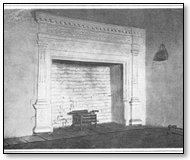
FIREPLACE AT BRADDOCKS
PRIEST'S HOLES
Hidden Rooms
A GREAT DEVISER OF "PRIEST'S HOLES"
During the deadly feuds which existed in the Middle Ages, when no man was secure from spies and traitors even within the walls of his own house, it is no matter of wonder that the castles and mansions of the powerful and wealthy were usually provided with some precaution in the event of a sudden surprise—viz. a secret means of concealment or escape that could be used at a moment's notice; but the majority of secret chambers and hiding-places in our ancient buildings owe their origin to religious persecution, particularly during the reign of Elizabeth, when the most stringent laws and oppressive burdens were inflicted upon all persons who professed the tenets of the Church of Rome.
In the first years of the virgin Queen's reign all who clung to the older forms of the Catholic faith were mercifully connived at, so long as they solemnised their own religious rites within their private dwelling-houses; but after the Roman Catholic rising in the north and numerous other Popish plots, the utmost severity of the law was enforced, particularly against seminarists, whose chief object was, as was generally believed, to stir up their disciples in England against the Protestant Queen. An Act was passed prohibiting a member of the Church of Rome from celebrating the rites of his religion on pain of forfeiture for the first offence, a year's imprisonment for the second, and imprisonment for life for the third.[1] All those who refused to take the Oath of Supremacy were called "recusants" and were guilty of high treason. A law was also enacted which provided that if any Papist should convert a Protestant to the Church of Rome, both should suffer death, as for high treason.
[Footnote 1: In December, 1591, a priest was hanged before the door of a house in Gray's Inn Fields for having there said Mass the month previously.]
The sanguinary laws against seminary priests and "recusants" were enforced with the greatest severity after the discovery of the Gunpowder Plot. These were revived for a period in Charles II.'s reign, when Oates's plot worked up a fanatical hatred against all professors of the ancient faith. In the mansions of the old Roman Catholic families we often find an apartment in a secluded part of the house or garret in the roof named "the chapel," where religious rites could be performed with the utmost privacy, and close handy was usually an artfully contrived hiding-place, not only for the officiating priest to slip into in case of emergency, but also where the vestments, sacred vessels, and altar furniture could be put away at a moment's notice.
It appears from the writings of Father Tanner[1] that most of the hiding-places for priests, usually called "priests' holes," were invented and constructed by the Jesuit Nicholas Owen, a servant of Father Garnet, who devoted the greater part of his life to constructing these places in the principal Roman Catholic houses all over England.
[Footnote 1: Vita et Mors (1675), p. 75.]
"With incomparable skill," says an authority, "he knew how to conduct priests to a place of safety along subterranean passages, to hide them between walls and bury them in impenetrable recesses, and to entangle them in labyrinths and a thousand windings. But what was much more difficult of accomplishment, he so disguised the entrances to these as to make them most unlike what they really were. Moreover, he kept these places so close a secret with himself that he would never disclose to another the place of concealment of any Catholic. He alone was both their architect and their builder, working at them with inexhaustible industry and labour, for generally the thickest walls had to be broken into and large stones excavated, requiring stronger arms than were attached to a body so diminutive as to give him the nickname of 'Little John,' and by this his skill many priests were preserved from the prey of persecutors. Nor is it easy to find anyone who had not often been indebted for his life to Owen's hiding-places."
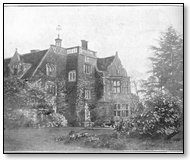
ASHBY ST. LEDGERS, NORTHAMPTONSHIRE
How effectually "Little John's" peculiar ingenuity baffled the exhaustive searches of the "pursuivants," or priest-hunters, has been shown by contemporary accounts of the searches that took place frequently in suspected houses. Father Gerard, in his Autobiography, has handed down to us many curious details of the mode of procedure upon these occasions—how the search-party would bring with them skilled carpenters and masons and try every possible expedient, from systematic measurements and soundings to bodily tearing down the panelling and pulling up the floors. It was not an uncommon thing for a rigid search to last a fortnight and for the "pursuivants" to go away empty handed, while perhaps the object of the search was hidden the whole time within a wall's thickness of his pursuers, half starved, cramped and sore with prolonged confinement, and almost afraid to breathe, lest the least sound should throw suspicion upon the particular spot where he lay immured.
After the discovery of the Gunpowder Plot, "Little John" and his master, Father Garnet, were arrested at Hindlip Hall, Worcestershire, from information given to the Government by Catesby's servant Bates. Cecil, who was well aware of Owen's skill in constructing hiding-places, wrote exultingly: "Great joy was caused all through the kingdom by the arrest of Owen, knowing his skill in constructing hiding-places, and the innumerable number of these dark holes which he had schemed for hiding priests throughout the kingdom." He hoped that "great booty of priests" might be taken in consequence of the secrets Owen would be made to reveal, and directed that first he should "be coaxed if he be willing to contract for his life," but that "the secret is to be wrung from him." The horrors of the rack, however, failed in its purpose. His terrible death is thus briefly recorded by the Governor of the Tower at that time: "The man is dead—he died in our hands"; and perhaps it is as well the ghastly details did not transpire in his report.
The curious old mansion Hindlip Hall (pulled down in the early part of the last century) was erected in 1572 by John Abingdon, or Habington, whose son Thomas (the brother-in-law of Lord Monteagle) was deeply involved in the numerous plots against the reformed religion. A long imprisonment in the Tower for his futile efforts to set Mary Queen of Scots at liberty, far from curing the dangerous schemes of this zealous partisan of the luckless Stuart heroine, only kept him out of mischief for a time. No sooner had he obtained his freedom than he set his mind to work to turn his house in Worcestershire into a harbour of refuge for the followers of the older rites. In the quaint irregularities of the masonry free scope was given to "Little John's" ingenuity; indeed, there is every proof that some of his masterpieces were constructed here. A few years before the "Powder Plot" was discovered, it was a hanging matter for a priest to be caught celebrating the Mass. Yet with the facilities at Hindlip he might do so with comfort, with every assurance that he had the means of evading the law. The walls of the mansion were literally riddled with secret chambers and passages. There was little fear of being run to earth with hidden exits everywhere. Wainscoting, solid brickwork, or stone hearth were equally accommodating, and would swallow up fugitives wholesale, and close over them, to "Open, Sesame!" again only at the hider's pleasure.