Medieval Libraries and Manuscripts
I now pass to the treatment of books in the libraries of the monastic orders. These either adopted the Rule of S. Benedict, or based their own Rule upon its provisions. It will therefore be desirable to examine what he said on the subject of study, and I will translate a few lines from the 48th chapter of his Rule, Of daily manual labour.
Idleness is the enemy of the soul; hence brethren ought, at certain seasons, to occupy themselves with manual labour, and again, at certain hours, with holy reading....
Between Easter and the calends of October let them apply themselves to reading from the fourth hour till near the sixth hour. After the sixth hour, when they rise from table, let them rest on their beds in complete silence; or, if any one should wish to read to himself, let him do so in such a way as not to disturb any one else....
From the calends of October to the beginning of Lent let them apply themselves to reading until the second hour.... During Lent, let them apply themselves to reading from morning until the end of the third hour ... and, in[Pg 15] these days of Lent, let them receive a book apiece from the library, and read it straight through. These books are to be given out at the beginning of Lent. It is important that one or two seniors should be appointed to go round the monastery at the hours when brethren are engaged in reading, in case some ill-conditioned brother should be giving himself up to sloth or idle talk, instead of reading steadily; so that not only is he useless to himself, but incites others to do wrong.
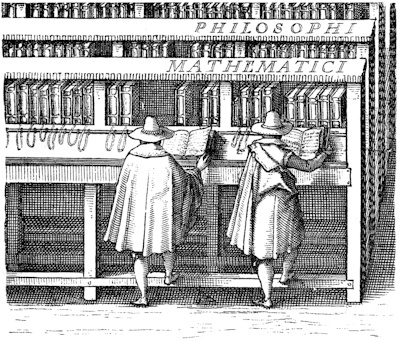
"Behold! how great a matter a little fire kindleth!" These simple words, uttered by one who in power of far-reaching influence has had no equal, gave an impulse to study in the ages it once was the fashion to call dark which grew with the growth of the Order—till wherever a Benedictine house arose—or a monastery of any one of the Orders which were but off-shoots from the Benedictine tree—books were multiplied, and a library came into being, small indeed at first, but increasing year by year, till the wealthier houses had gathered together a collection of books that would do credit to a modern University.
Next: Monastaries